
Last week I sat down to record an hour-long master class chock full of everything I learned as a consumer founder with an exit or three under my belt—more on that soon!—and a few early-stage regrets I had jumped out at me. It’s easy to romanticize the early days, especially when you’re long on the other side… but they were littered with metaphorical landmines, and my trip down memory lane reminded me of a few I might be able to help you avoid.
Early stage founders: these are a few of the mistakes I made founding, growing, and scaling companies like GIR, Voltaire, and Mvnifest, and the ones I see consumer founders make now that I’m in the investor seat.

Mistake 1: Over-engineering the first product instead of launching to learn fast (aka, give yourself a break)
An easy mistake to make at the very beginning is actually just trying to be too perfect. You're going to make mistakes. (I’m sorry!)
Step 1 is acceptance—and yes, I know that for most people that’s supposed to be Step 5. But Step 1 is the part where you accept that there will be mistakes, and then give yourself a little bit of grace. Not giving yourself grace can be the biggest start-up mistake of all, because you're about to do something that's fundamentally hard! There’s no way around it.
Sure, this one’s short and sweet. But all the mistakes to come ladder up into it: if you give yourself the freedom to fail, ask “the wrong” questions, embarrass yourself by being curious, persistent, or new to something… then you’re on the right track.
Mistake 2: Burning cash on fancy sh*t like swag before validating market fit
Over-investing in brand at an early stage—especially if you're not really well capitalized—can be a huge bump in the road.
Why? Well, because you need to get in learning mode as fast as you can, and you need customers for that.
Balance is critical here: if you're too rough around the edges, then you don't take the first step into brand, which is to build trust.
You have to have just enough brand equity to start to build trust with your customers or potential customers… but having too much means that you're going to be emotionally—and financially—stuck with what you've got, which will reduce your willingness to learn and experiment. I’m not asking you to anger the design gods or skimp on critical packaging investments. Spend on brand, but spend it wisely.
In other words, accept that there are going to be mistakes and let there be rough edges somewhere…but don't let there be so many rough edges that you don't give yourself the opportunity to start earning people's trust.
Sound tough to balance? It is!
Mistake 3: Trying to be everything to everyone instead of nailing one customer segment
Another mistake that I've made in the past is trying to be everything, everywhere, all at once. (Unfortunately, this has now become a tagline for me as I try to run both our portfolio at Hologram Capital and build a best-in-class ops stack for consumer brands over at Endless Commerce. Oops.)
But we can all see what an easy trap this is for an early stage brand! If you can find a narrow focus, or a single customer, or a single persona to whom you can mean the whole world, then that’s a hell of a lot better than being pretty good for a lot of people.
Want to operationalize that approach?
Imagine an ideal customer. So often for consumer founders, it's yourself, right? You're obsessed with this. Go talk to yourself in the third person and figure out for you as a customer: what would make this just rock? What would make it a no brainer? What would make it worth pulling dollar bills out of your wallet for?
If you can pick one or maybe two very narrow customer personas to play to, and win them, then you can go on and win the next one.
What's really difficult is trying to bifurcate the communication so broadly at the very beginning that you try to speak to everybody's objections.
Just answer one person's objections fully, completely, holistically—with all the juice you’ve got!—and you'll be good to go.
Mistake 4: Not validating your product before going all in on it.
For the love of Pete: before you quit your day job or max out your credit cards, prove that people will actually pay for what you're building. How? Use a pre-order campaign. Ask some not-friends what they’d pay for your hypothetical product. Create “a party that never happened,” which is my code for a realistic-looking product launch - complete website, product photos, the works - for something that doesn't exist yet. If people pre-order or sign up for your waitlist, you know you're onto something. If they don't, you just saved yourself months of building the wrong thing.
If you're a really creative person and you like copywriting and art, then go make an ad. And if you're a little more technical and throwing together a website sounds fun, there you go! It comes down to how much energy you have and what you can mash together with your natural abilities.
The more folks that you talk to and the further degrees of separation they could be from your immediate social network, the better quality data you'll have around your product. The opinions of 20 people you've never met before are way more valuable than the opinions of family and friends. (We love ‘em! But they’re biased.)
What you're looking for is uncomfortable opinions. Because uncomfortable opinions help you validate an idea at a really early stage.
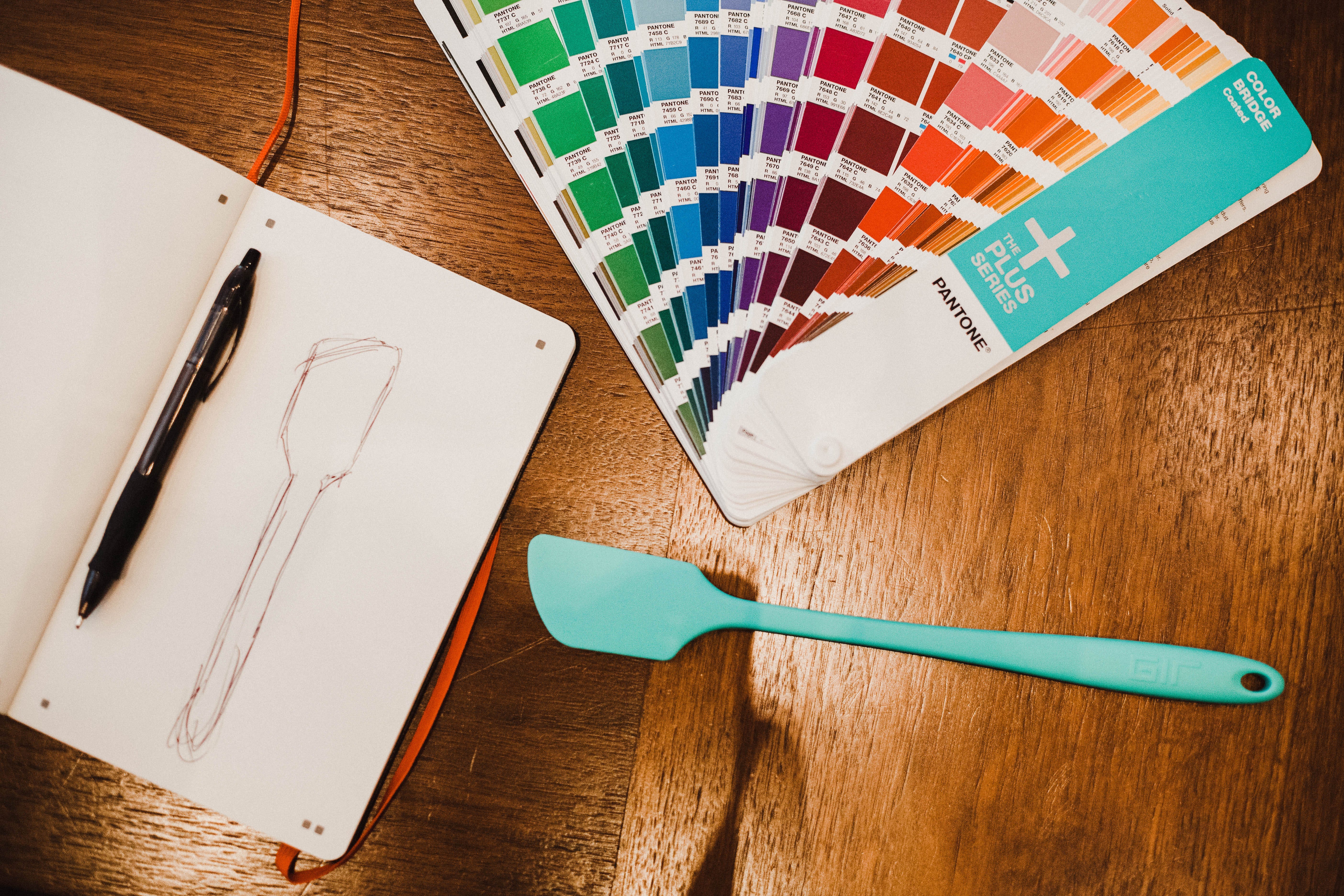
One last piece of advice: throw together a prototype. It's so easy to let the perfect thing be the enemy of scrappy, crappy prototypes. Spatulas are always my example: I cut one out of cardboard just to make sure that the approximate proportions were right. Is cardboard my perfect, final medium? Of course not—but from that cardboard prototype, I realized what I was working with was a little too wide, and I adjusted immediately before spending the next $10 on sculpey and the next $100 on home-cured silicone.
It’s infinitely more efficient to spend $10 protoyping… and then $100 prototyping… and if you’re still really convinced and obsessed at the end of that process, then $1,000 and so on.
If there’s really a business there, you may spend $10,000 on prototypes. But wouldn’t that money be better spent if you’ve tinkered and validated with your lunch money and a few trips to the craft store first?

If this was at all helpful for you, I’d love to know! Please shoot me a DM or hit us up in the comments, and best of all, consider forwarding to a friend.
Seasoned consumer vets… what mistakes did I miss? Anything you’d add?