
Back-to-school is a $146.8 billion retail moment, second only to the holidays, yet brands keep showing up in August for a party that kicked off in June. That, friends, is not fashionably late.
Shopping intent is spread almost evenly across June, July, August, and September. Our takeaway? "Season" now comes with quotation marks. Or maybe we call it back-to-school business quarter. Doesn’t roll off the tongue quite the same way.
So pencils down on the August-only strategy, and enjoy a scroll through this week’s extracurriculars.

e.l.f. Beauty and Bubble just dropped a limited-edition skincare-makeup hybrid line. +1 to two brands with overlapping Gen Z fanbases betting that loyalty is contagious just in time for…back-to-school!
Truff refreshed its label earlier this year to something generated and terrifying, but at least they kept the cap. Mercifully, the smoky pineapple launch returns to the OG design.
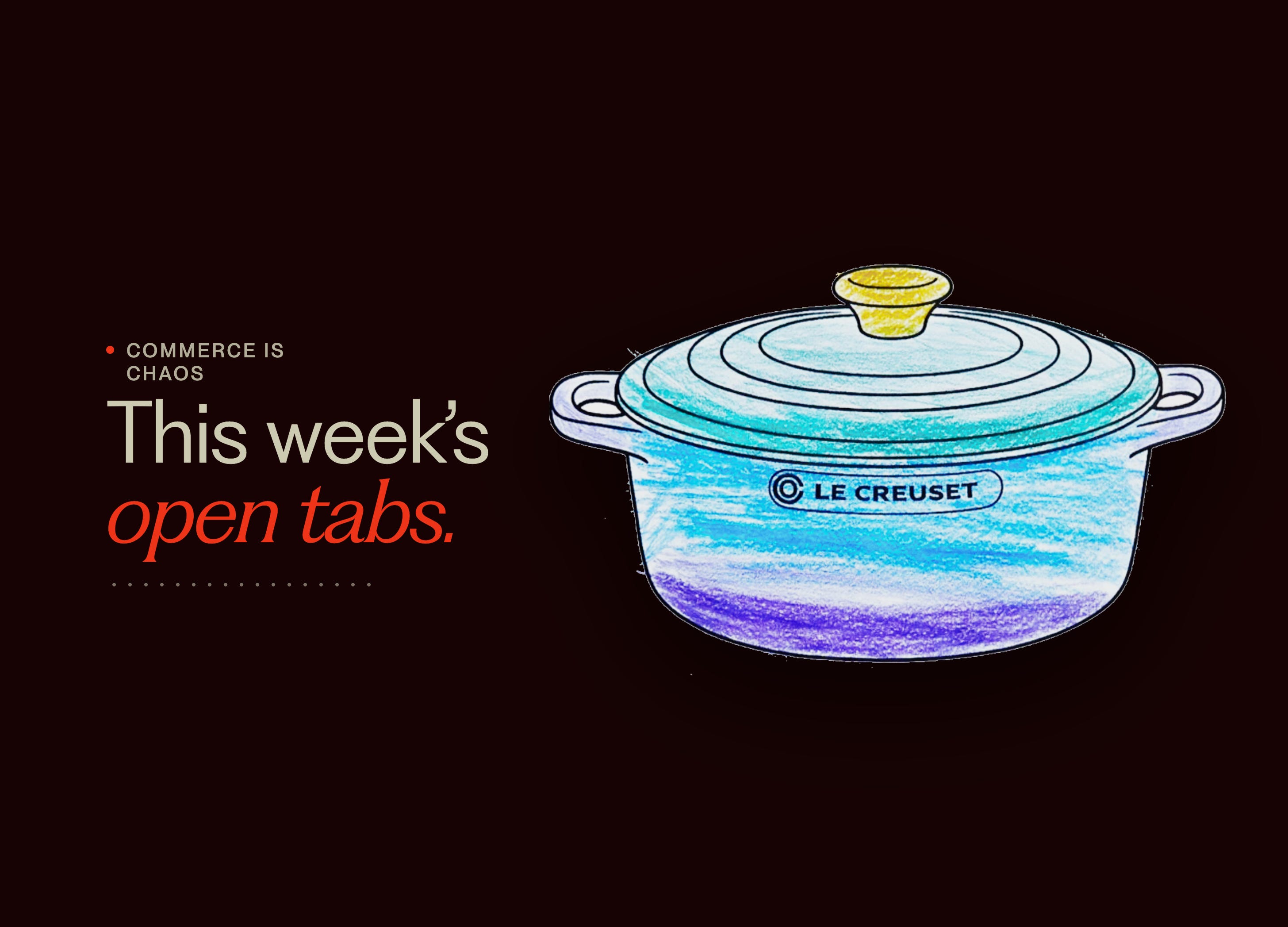
Le Creuset asked employees' kids to color and name its iconic Dutch oven. Positive feedback includes: "I would sell a kidney for Poison Green."
Figma and Shopify dropped merch (sure). Palantir dropped a tennis skirt (what). A mortgage company dropped $86 leggings (stop). B2B corpcore is officially here.
Stefanie Schoen of The Retail Advisor has a question for every founder with a sale rack: do you know why those SKUs are there?
Your brand’s reputation with AI may be cooked. One coworking space was described as noisy with 9-to-5 hours (inaccurate) and lost recommendations.
Ski brand Yardsale opened a store that doubles as a coffee shop and community hangout, tripled their week-one sales goal, and ran out of milk on day three. Anyone else up for hosting?


I’m on an Iceland adventure this week with Brian and the kids. The highlight…or maybe the opposite of a highlight? We’re right smack in the path of totality for the 2026 total solar eclipse.
In any specific place on Earth, this kind of eclipse only happens about once every 375 years. And I get to be in this specific place with favorite people on the planet.
The next total solar eclipse is August 2, 2027. If we started a “path of totality” family tradition, where should we see it?

Kate Assaraf is the founder and CEO of Dip Sustainable Hair Care, a plastic-free shampoo and conditioner bar brand she built after 20 years working inside the beauty industry. She launched Dip in October 2021 out of frustration: the plastic-free hair care that existed was made for the crunchy, all-natural consumer, and completely ignored everyone else who wanted salon-quality performance.
When her contract manufacturer went bankrupt in 2022, she rented a commercial space, put equipment on a credit card, and built a factory. She has grown Dip into a seven-figure business sold through independent surf shops, zero-waste stores, and eco salons. And here’s the kicker: she grew it entirely by word of mouth, with no paid ads, no influencers, no fake UGC, and (wait for it) no Amazon listing.
Kate gets into exactly how she made it all work. And yes, winging it played a part.

The coworking example is the version of this most owners will actually meet. It is rarely the assistant inventing something. It is the assistant repeating the only text it can find.
Out of 197 online stores I reviewed this summer, 62 were selling with the manufacturer's description word for word. Nothing on the page said why you would buy that product from that store rather than the forty others running the same paragraph. When an assistant has to describe the brand, that borrowed paragraph is what it has to work with.
Check that needs no tools and no budget. Open a fresh window, ask an assistant what your brand sells and who it is for, then read the answer next to your own product page. If the answer sounds like your supplier's catalogue, you know exactly where it came from.
What do you two see more often with the brands you talk to, wrong facts or no facts at all?